
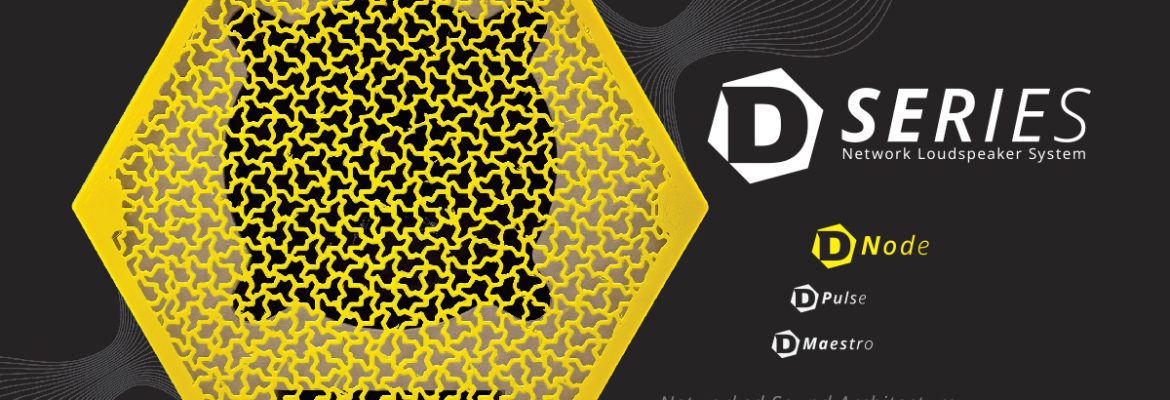
The D Series is a multidimensional architecture of sound — space, time, and harmony, precisely orchestrated.
Designed for spaces where clarity and control matter —from performance halls and multipurpose auditoria to cultural, religious, exhibition and conference venues, hospitality environments, and major public spaces such as airports and railway stations.
SYSTEM COMPONENTS
- D Node — Intelligent network loudspeaker and core acoustic element
- D Pulse — Networked subwoofer within the same system architecture
- D Maestro — Software platform for system control and optimisation
SYSTEM LOGIC
The D Series logic is simple: each loudspeaker is an intelligent, networked acoustic node, and system response emerges from the interaction of multiple nodes within the space.
This approach reduces installation complexity, increases predictability, and allows the acoustic performance of a venue to be shaped in software rather than fixed in hardware.
TECHNOLOGY
The D Series architecture is realised through a carefully integrated set of technologies, combining applied geometry, acoustic metamaterials, distributed signal processing, and network-native audio design.
Each element addresses a specific aspect of space, time, or sound perception — forming a coherent, intelligent system rather than a collection of components.
Intelligent Networked Audio Node
Each D Node / D Pulse integrates power, processing, amplification, and Dante Audio-over-IP networking into a single coherent entity.
As a Dante-certified system, it ensures compatibility with existing AoIP infrastructures, embedding intelligence at the point of sound radiation for scalable, predictable performance.
D Maestro — C3: Command, Control, and Communications
Software forms an integral architectural layer of the D Series, supporting coherent system behaviour and future adaptability across networked nodes.
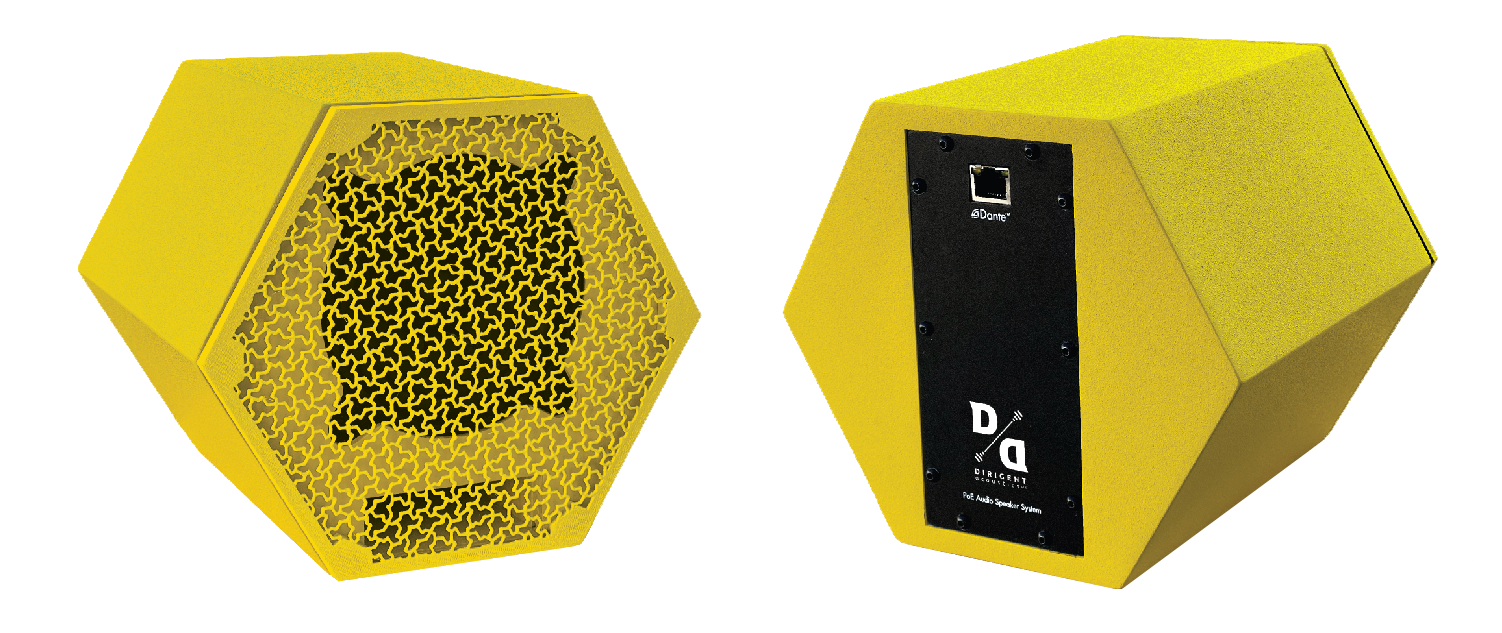
WHERE DETAILS MATTER
Every aspect of the D Series is shaped by the same architectural logic — where mathematics, acoustics, materials, and fine engineering work in harmony.
Hexagonal Geometry — Graphene-Inspired
A lattice-based geometry enables dense modular arrays, mechanical rigidity, and uniform spatial coverage with minimal architectural impact.
Metamaterials — Energy, Frequency, Vibration
Metamaterial structures within the port and enclosure reduce acoustic artefacts, The Vampire/Einstain tile-inspired aperiodic grille geometry minimises diffraction and high-frequency coloration.
A SPECTRUM OF POSSIBILITY
Configurable finishes allow every D Series system component to complement its spatial context or establish a distinctive visual presence.
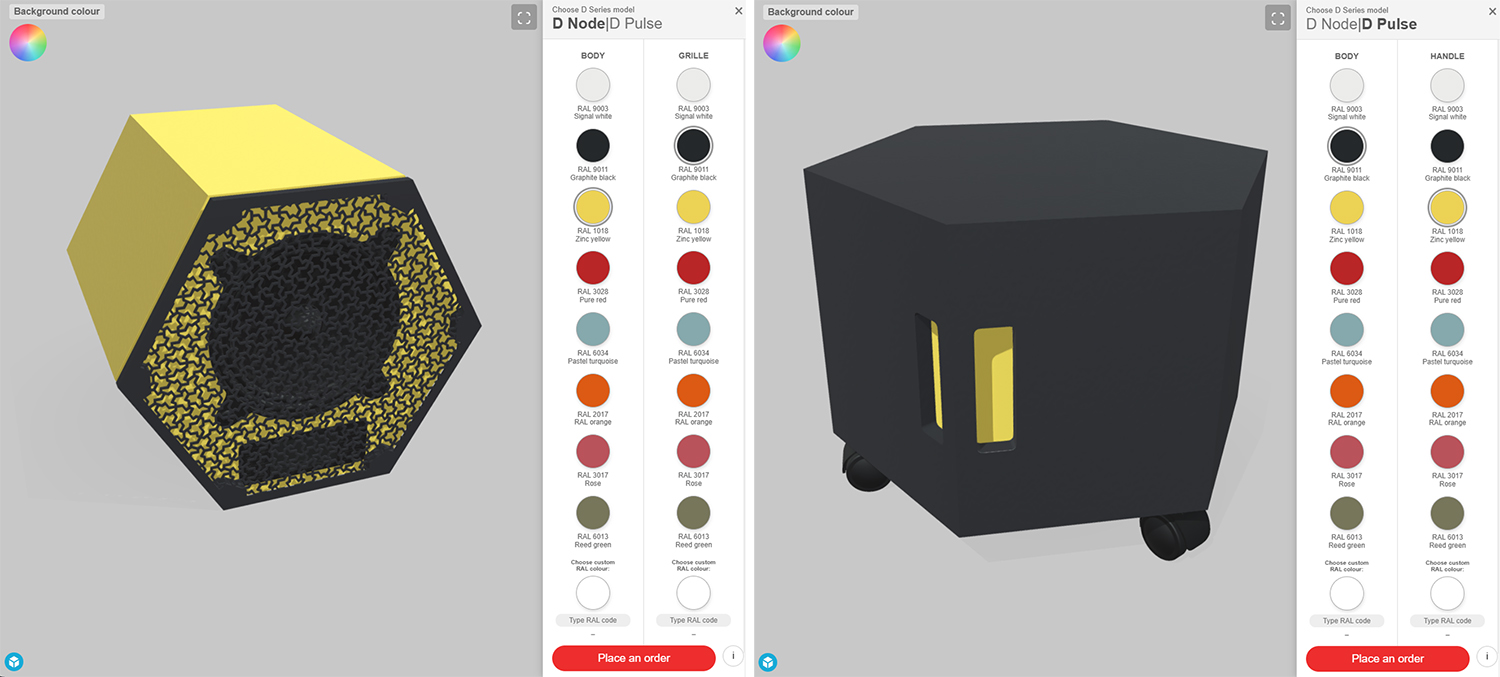
Explore the possibilities with our interactive colour configurator and preview each finish combination in real time, with standard and custom classic RAL colours available for precise project specification.
Visit the Colour Configurator Platform
DOWNLOADS
Data sheets
D Node (PDF) 
D Pulse (PDF)